Copper's got a plumbing problem
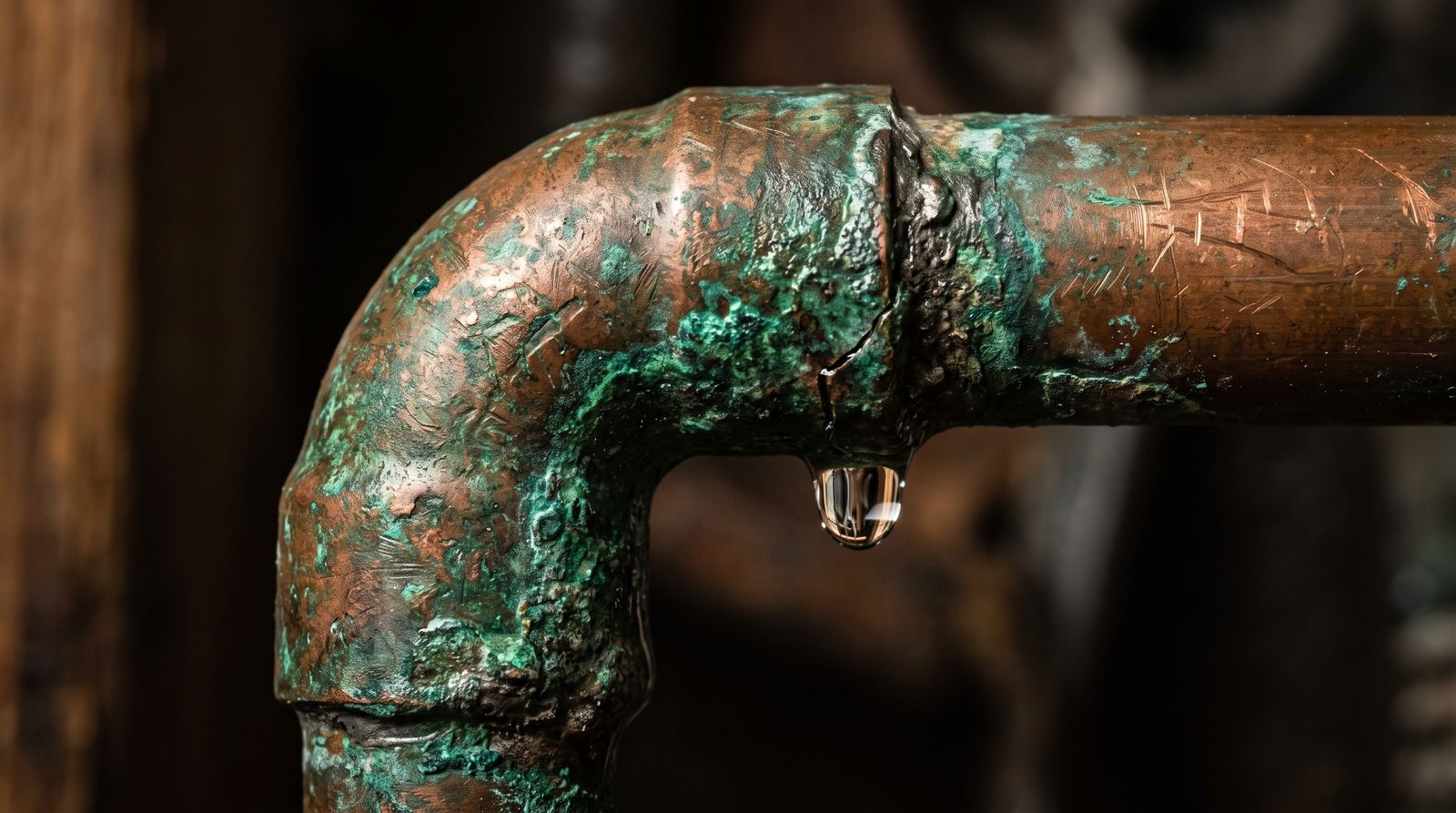
There’s plenty of copper. Too much of it is sitting in an American tank waiting on a tariff decision, while mine leaks in Peru, Indonesia and Chile leave the rest of the world paying record prices to keep the taps on.
Subscribe freeCopper isn't short. It's in the wrong pipe.
That's the strange thing about this market. Plenty of metal has been mined and refined. Yet the taps outside the United States keep running dry, and the pressure gauge in China just hit a record.
On 28 October, China's Yangshan warrant premium, what buyers pay on top of the London price to get copper into China, rose $17 to US$205 a tonne, Shanghai Metals Market reported. That's up from $158 on 22 October, a $47 jump in five trading days. Its headline was blunt: "Spot supply shortage continues to intensify".
Where's all the water gone?
Into the American tank.
Copper has gained about 16% this year "in a rally powered by supply tightness as huge tonnages were shipped to the US in anticipation of import tariffs", Bloomberg reported on 28 October. On the same day, a closely watched LME spread spiked higher, pointing to more short-term supply stress. On 29 October, three-month copper was at $14,432.50 in London, just under the previous day's two-week high of $14,517, Reuters reported.
Last issue we noted Wood Mackenzie's numbers: U.S. copper inventory cover above 170 days, the rest of the world on 48. The tank is full. The pipes elsewhere are rattling.
And nobody knows when the valve opens. Washington still hasn't decided on a tariff on refined copper.
"As the year-end approaches, US tariff policies on refined copper could generate significant market volatility, with the eventual implementation of these policies likely to drive price trends," Chinese brokerage Chaos Ternary Futures wrote in a note.
That's the plumbing problem in a sentence. A policy decision that hasn't been made is holding back a pool of metal the rest of the world wants.
Who's got a leak?
Pretty much everyone upstream.
On 27 October, Peru's Antamina, owned by BHP, Glencore, Teck and Mitsubishi, suspended operations after a worker died at its Yanacancha site, Reuters reported. A source told the newswire there was no timetable for a restart. Peru is the world's third-largest copper producer, and Antamina's output fell 9% last year after another fatal accident.
In Indonesia, the Grasberg pipe is only partly patched. Freeport said mill throughput averaged about 140,000 t of ore a day in the September quarter, roughly 67% of rates before the September 2025 incident. It expects 80% by mid-2027 and close to full capacity by the end of 2027.
Freeport's quarterly copper production fell 9% to 832 million pounds, though higher prices still lifted net income 74% to $1.2 billion, Reuters reported.
Then there's Chile, the mains supply.
Eight big operations owned by BHP, Antofagasta Minerals and Anglo American produced 1.617 Mt of copper in the nine months to September, down 11% on a year earlier, La Tercera reported on 20 October. Escondida was down 12%, as ore grades fell from 0.94% to 0.81%. Spence fell 26%.
Two strikes threatened to make it worse. Neither did. Escondida's supervisors settled on 14 October and Centinela's unions on 18 October. So the leaks are geological and operational, not industrial.
Can anyone fix the pipes?
Slowly, and mostly in America.
Freeport expects to decide this quarter on expanding its Bagdad mine in Arizona, which could add 200 million to 250 million pounds of copper a year for about $4.5 billion, Reuters reported. That's real new supply. It's also years away.
Yet here's the bit that matters for the AI build-out. Every new data centre, substation and transmission line is a copper order, and most of them are being built outside the American tank.
If Washington finally sets a tariff, the U.S. could keep sucking metal in. If it doesn't, the tank could drain back out and flood the market. Either way, the pressure sits with buyers in Asia, Europe and Australia, who are paying record premiums to keep the water running.
Bad plumbing is a mining story for now. If Antamina stays shut and Grasberg's ramp-up slips, the price of building AI goes up with it.
Across the build-out
Mine. Peru's Antamina, owned by BHP, Glencore, Teck and Mitsubishi, halted operations on 27 October after a worker died at its Yanacancha site. There's no restart timetable (Reuters via Mining Weekly).
Mine. Freeport beat profit estimates with adjusted earnings of 88c a share against 81c expected, on a realised copper price of US$6.54/lb. A decision on the $4.5 billion Bagdad expansion in Arizona is due this quarter (Reuters via Mining Weekly).
Policy. Resources Minister Madeleine King released a refreshed Critical Minerals Strategy on 27 October, with more weight on processing and refining. "It places greater emphasis on processing and refining critical minerals," Minister King said (Minister's release).
Refine. Europe wants a slice of Australia's A$1.2 billion strategic reserve, which prioritises antimony, gallium and rare earths. "For example, on tungsten, we need mines, but even much more strategic today, we need refining," French minerals delegate Benjamin Gallezot said at IMARC (Reuters via Mining Weekly).
Watch. Washington's call on a tariff on refined copper. "As the year-end approaches, US tariff policies on refined copper could generate significant market volatility," Chaos Ternary Futures wrote (Bloomberg via Moneycontrol).
The number
US$205 a tonne
That's the Yangshan warrant premium on 28 October, up $17 in a day and a record high, according to Shanghai Metals Market. It's what Chinese buyers pay on top of London just to get copper landed. On 22 October it was $158. Reuters called it the highest in more than a decade (SMM).
That's it from me this week.
Mission Critical follows the AI revolution from the mine to the mind: the minerals and how they're mined and refined, the chips and the factories, the geopolitics, markets and prices, the software, and what it all means for jobs and for people. By Cameron Drummond.
If your company needs a feature, a briefing paper or research on anything above, reply to any Mission Critical email.
Cam
Subscribe freeDisclosure: At the time of writing, Cameron Drummond holds no shares in any company named in this issue.
General advice warning: This newsletter is general information only. It was prepared without taking into account your objectives, financial situation or needs, and it is not a recommendation to buy, sell or hold any financial product. Before acting on it, consider whether it suits your circumstances and, if necessary, get advice from a licensed financial adviser. Past performance is not a reliable indicator of future performance.